
As we have entered 2026, the world of electric vehicles is going through a massive transformation. The first three quarters of 2025 saw sales of over 1.2 million new EVs, surpassing any previous year. Looking at the bigger picture, over 7 million EVs have been sold between 2015 and September 2025. And more than half of those sales happened in just the last three years.
If you are still contemplating buying an electric car, this year might be the one that helps you make a decision. The industry has gone beyond a “test phase” to a total revolution. We are no longer talking about installing a few plugs in parking lots; we are experiencing a complete overhaul of how we think about travel, energy, and convenience.
In this blog, we will walk through key trends that are likely to shape the EV industry this year and ahead. Let’s dive into them.
The End of Range Anxiety
Range anxiety seems to be an elephant in the room. Finding a charger nearby is still a big concern for any potential EV owner. The good thing is that this concern is going to be a thing of the past. Thanks to the technological advancements, new EVs can travel over 300 or 400 miles on a single charge.
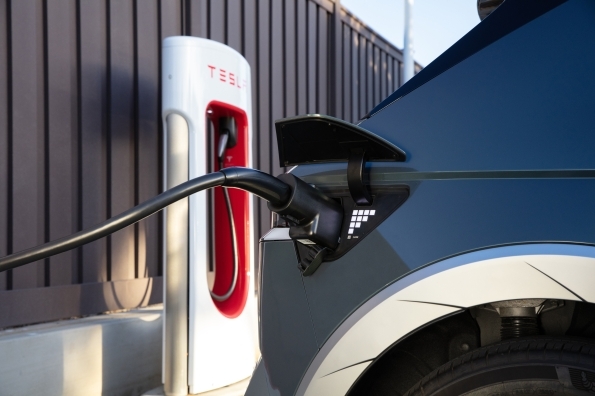
Above all, several charging stations have been installed, meaning that you can find chargers not just in metro cities, but at rural gas stations, roadside diners, and remote parks.
The goal of the industry this year is to make sure you are never more than a few minutes away from a power source, making long road trips just as easy as they were with a gasoline car. According to one study, there are over 1.3 million public charging points across the world. The study also finds that the number of these chargers is likely to go up as the sales of EVs increase.
Talking about the USA, there are tens of thousands of charging stations across the nation, as confirmed by the U.S. Department of Energy.
The Instrumental Role of AI:
AI has impacted the way many industries operate. According to one report, over 90% of organisations are now using AI for at least one business function. And the EV charging industry is no exception. Investment in AI for the automotive industry is projected to go beyond USD 14.92 billion by 2030, as found by one study.
AI has become a key element in setting an efficient charging system. It can play an important role in the energy management of EVs. For example, it can plan charging times based on how many vehicles are expected, how much power is available, and what is happening in real time. This technology can also reduce power use during peak hours to lower electricity bills.
For businesses that run many charging locations or vehicle fleets, this can lead to lower costs, fewer breakdowns, and chargers that are available more often. When AI is integrated with solar panels and battery storage, it can balance energy from various sources in a smarter way.
Major technology companies like NVIDIA are now creating AI models suitable for realistic virtual environments before using them in EVs. Once they are installed, they keep learning from real-world driving so that the vehicles can better understand busy city roads and the behaviour of other vehicles on the road. They can learn, think, and make decisions while handling real-world challenges on their own.
Based on these findings, it is safe to say that AI and EVs are likely to go hand in hand in the upcoming years.
Super-Fast Charging is the New Standard
EV drivers can expect the rise of ultra-fast charging in the upcoming years, thanks to the continuous experiments to build a high-power charging network on a global scale. Once reserved only for big electric trucks and buses, megawatt-level charging is now going to be available for regular passenger EVs. Companies like Zeekr, BYD, and Huawei are pushing charging speeds to a whole new level. With a charging power of around 1.3 MW, an electric car could get about 500 km of driving range in just 5 minutes.
Chinese automaker BYD launched its new Super e-platform in March 2025. This is said to be the world’s first mass-produced 1000-volt EV architecture. According to the manufacturer’s claims, an EV charged with this system can gain nearly 400 km of range in just 5 minutes.
Zeekr, a Chinese automobile company, has launched a 1.2 MW liquid-cooled charger for passenger cars, which is even faster than BYD’s 1 MW system. Although these ultra-chargers are available in China for now, we can soon expect them on U.S. soil.
Also, the newest “ultra-rapid” chargers are being installed along highways, which can add hundreds of miles of range to your car in just 15 to 20 minutes.
The Boom in the EV Charging Infrastructure Market
In 2024, the U.S. market for electric vehicle charging infrastructure was worth about USD 5.09 billion. It is projected to grow rapidly, at a rate of over 30% each year from 2025 to 2030. This strong growth is triggered by both government and private companies, who are pushing for more electric vehicle use.
These efforts have helped increase EV sales and made people more aware of the benefits of driving electric vehicles. The market growth also hinges on the new technologies such as portable chargers, smart charging systems, easy automated payment options, and two-way charging that lets vehicles send power back to the grid.
Wireless Charging is Finally Arriving
You simply park your car over a special pad on the ground, and it starts charging automatically—no cables required. This is the beauty of wireless charging. While charging phones wirelessly has become the norm, we can expect the same convenience in EVs soon.
Although it is still mostly found in premium locations or luxury vehicle models, wireless charging pads are appearing in high-end parking garages and some private driveways. A study by Next Move Strategy Consulting found that the wireless EV charging market can hit the 568 billion U.S. dollar mark by 2030.
Your Car as a Backup Battery
One of the exciting trends in EV charging is something called bidirectional charging (Vehicle-to-Grid/Home/Load – V2G/V2H/V2L). This lets your car act as a giant battery for your house. Simply put, your EV can send power back into your home to keep your major appliances running and your lights on. This way, your EV acts as a giant battery for your house.
A recent report shows that bidirectional charging in Europe can save up to 22 billion euros annually by 2040. In fact, it can make EVs the fourth largest power supplier by 2040, meeting 15-20% electricity demand during peak hours as confirmed by the same study.
However, bidirectional EV charging is not common yet. Currently, it is limited to some established models such as Nissan Leaf, Hyundai Ioniq 5, Ford F-150 Lightning, and Tesla. However, it is growing rapidly owing to the support from automakers and energy providers. Tesla has assured that all its EVs will be capable of bidirectional charging in 2025, while GM is looking to make it standard for its EVs by 2026
The Conclusion
As we analyze the EV charging trends of 2026 and beyond, the industry shows no signs of slowing down. The infrastructure is becoming more reliable, the speeds are getting faster, and the experience is becoming more human-centered.
The flexibility and convenience delivered by the improved charging infrastructure will make the EV adoption rate even better.